
Valle d’Itria is not one destination. It is a landscape of white towns, trulli, olive groves, vineyards and country roads — and that is exactly why it is easy to over-plan.
The strongest trip is not a sequence of five towns in one day. It is a good base, a few carefully chosen places, a long lunch, a countryside stay and enough time for one town to become familiar instead of merely photographed.
Why Valle d’Itria works
Italia.it describes the valley as a landscape of olive groves, vineyards, trulli and whitewashed towns spread across the provinces of Bari, Brindisi and Taranto. The region’s appeal comes from the relationship between those towns and the countryside around them.
That makes Valle d’Itria unusually good for travellers who want architecture, food and landscape in the same trip. It also means the quality of the journey depends heavily on where you stay and how many places you try to fit into each day.
Where to base yourself
- Locorotondo — compact, beautiful and strong for evenings, views and short drives into the valley.
- Cisternino — smaller-scale, food-led and well placed for countryside stays.
- Martina Franca — a stronger urban base with more architectural depth and a fuller evening rhythm.
- Countryside masseria or trullo — best when the stay itself should be part of the experience rather than only somewhere to sleep.
Locorotondo — the compact base
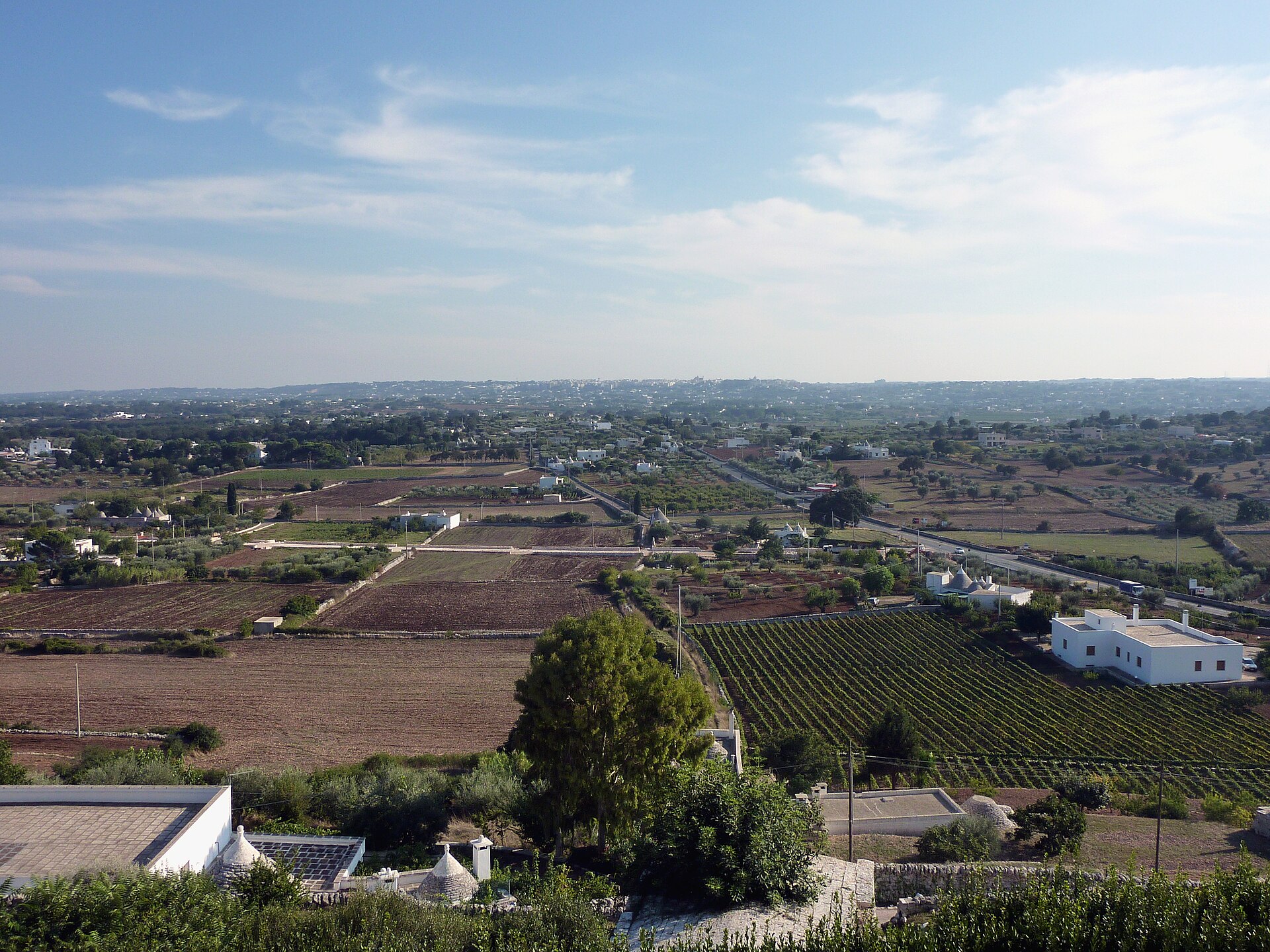
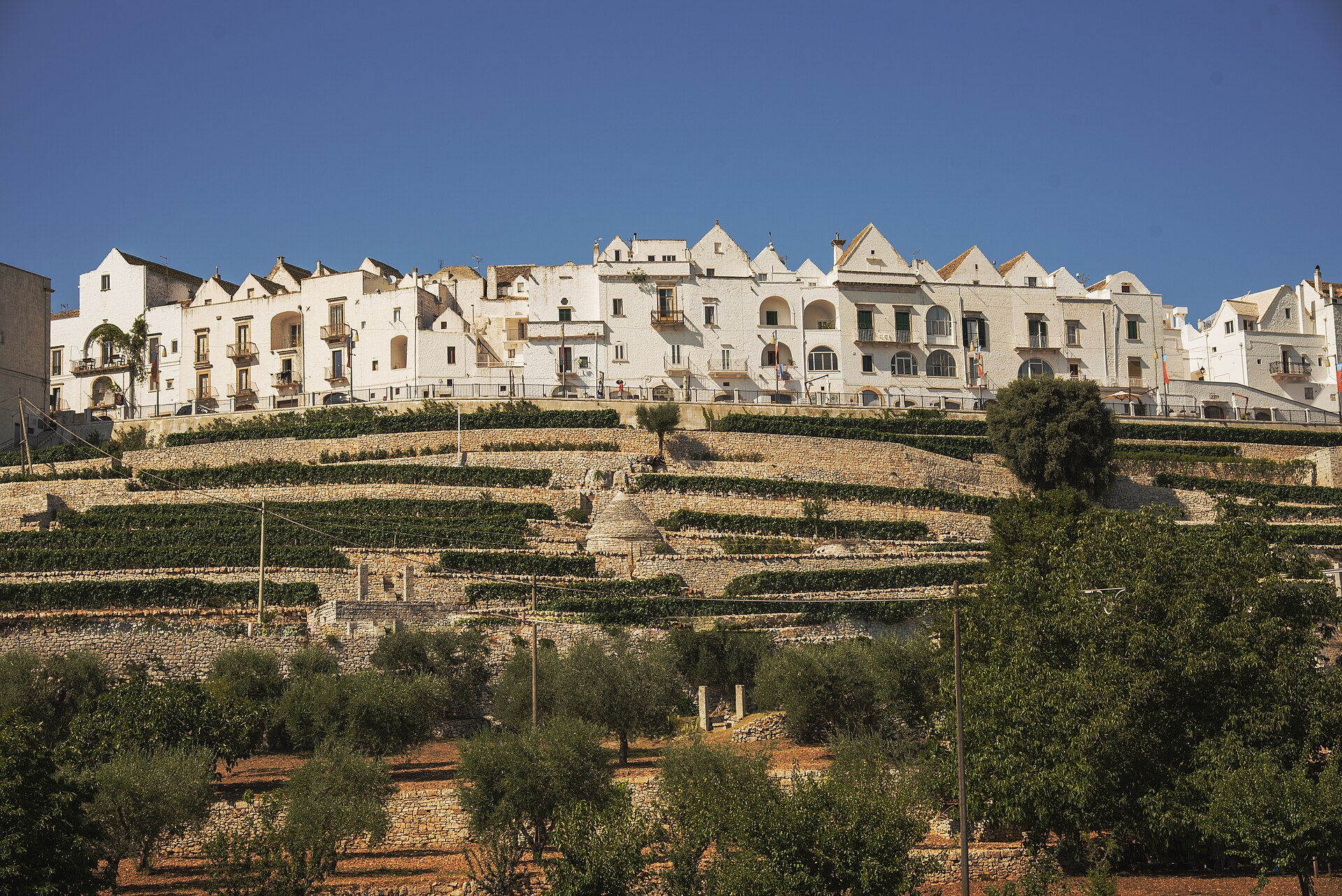
Locorotondo is one of the easiest places to understand the valley’s scale. The historic centre is compact, white and highly walkable, while panoramic viewpoints open directly onto the surrounding countryside.
Visit Puglia highlights Locorotondo’s white historic centre, traditional cummerse roofs, panoramic terraces and local wine and olive-oil culture. For OREVYON, its value is less about a long attraction list and more about being a base you can return to at the end of the day.
couples, evening walks, compact historic atmosphere and travellers who prefer one strong base.
3–5 nights works well if Locorotondo anchors the wider valley.
the town itself is small; the stay becomes richer when you combine it with countryside and selected nearby towns.
Alberobello — important, but not the whole valley
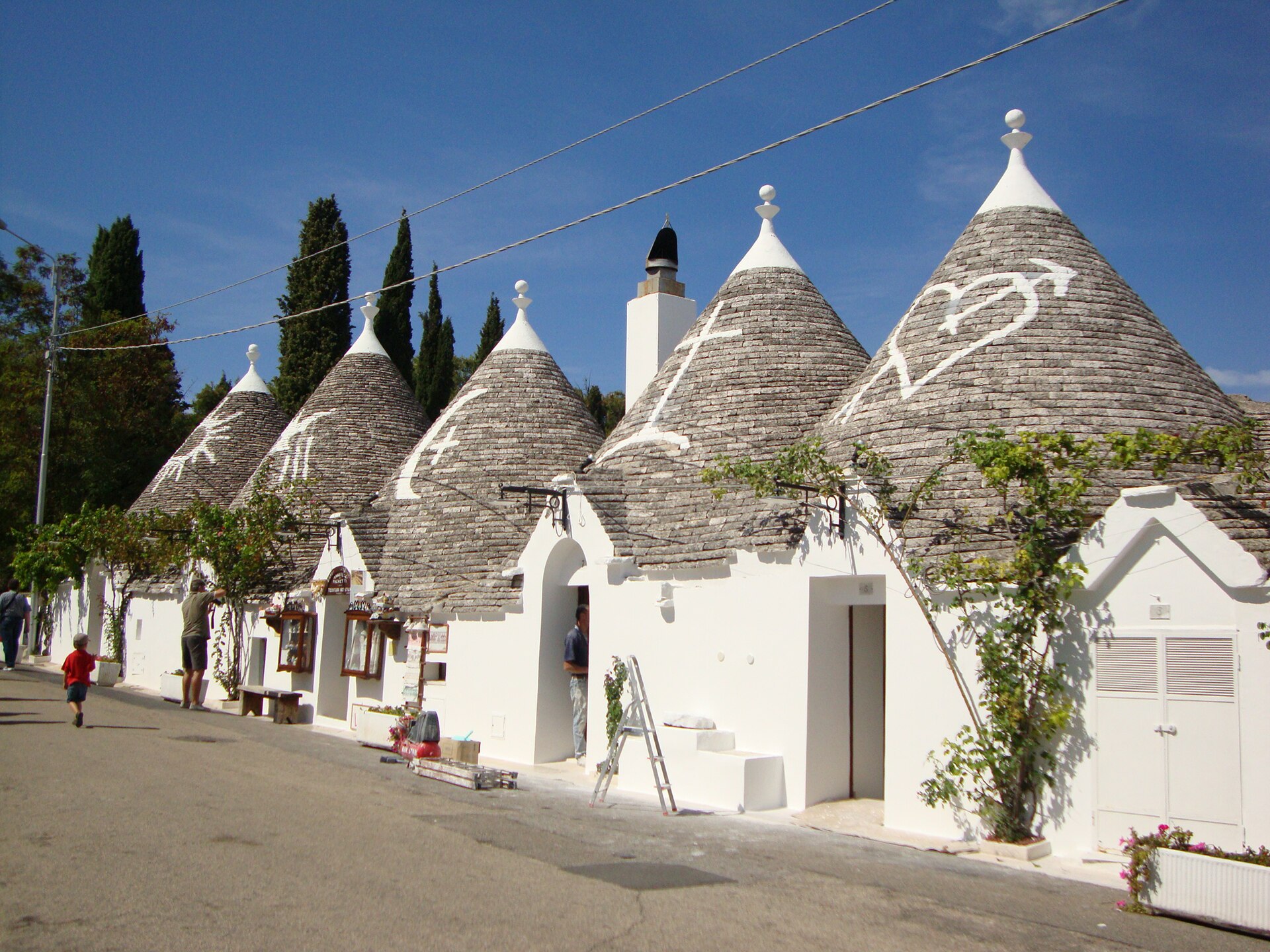
Alberobello matters because the concentration of trulli is extraordinary. UNESCO describes the trulli as dry-stone limestone dwellings with characteristic conical or domed roofs and notes that the highest concentration and best-preserved examples are in Alberobello.
It is also the place in the valley most likely to feel shaped by visitor pressure. OREVYON would treat Alberobello as a focused visit rather than automatically making it the centre of the whole trip.
architecture, vernacular building, first-time visitors and understanding the trulli tradition.
go early or later in the day when possible and keep the visit deliberate rather than exhaustive.
crowd pressure and commercial intensity can change the feel dramatically at busy times.
The countryside — trulli, masserie and the part worth staying for
The rural layer is what gives Valle d’Itria real stay depth. Visit Puglia describes countryside divided by dry-stone walls, with trulli, masserie, olive groves, vineyards and agricultural stays spread through the landscape.
A good masseria or trullo stay changes the trip because the accommodation stops being neutral. Breakfast, pool time, a local dinner or simply returning through the countryside becomes part of the travel rhythm.
food-led travel, couples, design-conscious stays, olive landscapes and slower mornings.
2–4 nights in the countryside can be enough to make the region feel like a stay rather than a sightseeing loop.
rural depth usually comes with greater car dependence, especially at night.
How many nights?
Four to six nights is a strong first range. Three can work if you stay focused. A week makes sense when the accommodation, food and countryside are part of why you are travelling — not when every day needs a new headline sight.
When Valle d’Itria works best
Late spring and early autumn are natural fits for walking, outdoor meals and countryside stays without building the whole day around heat. Summer brings the strongest energy and demand, especially in famous towns. Winter can work for food and quiet atmosphere, but the trip becomes less about outdoor rhythm.
Mobility & friction
A car is the simplest way to connect countryside stays, smaller towns and evening plans. Some towns are linked by rail, but the best rural version of Valle d’Itria is harder to build without private mobility. OREVYON should make that trade-off explicit rather than pretending the region is frictionless car-free.
Food & evenings
This is one of the region’s strongest dimensions. Valle d’Itria supports a trip built around local produce, olive oil, wine, small-town restaurants, masseria dinners and long lunches. Evening depth is atmospheric rather than nightlife-heavy, with the best experience often coming from walking one town after dinner rather than searching for another venue.
The OREVYON decision
Choose Valle d’Itria when food, architecture and countryside matter more than a dense list of attractions. It is especially strong for travellers who enjoy returning to the same base and letting short distances create rhythm instead of urgency.
Look elsewhere if you want major nightlife, a fully car-free regional stay or a trip where every day needs a different blockbuster sight. Valle d’Itria is about accumulation of atmosphere rather than accumulation of highlights.