
Three days in Lisbon is enough to understand the city — but only if you stop trying to collect it.
The mistake is not missing one more monument. It is crossing Lisbon back and forth, stacking timed interiors on top of each other and reaching the evening too tired to enjoy the neighbourhood you chose to stay in.
This OREVYON route assumes three genuinely usable days. It groups the city by geography, keeps one meaningful anchor per day, leaves room for lunch and detours, and treats Lisbon's hills as part of the planning rather than an inconvenience you discover halfway through.
Before you start · The 72-hour rule
- Do not build the trip around a checklist of ten headline sights.
- Move into one part of Lisbon and stay there long enough for the area to make sense.
- Use transit to remove unnecessary uphill effort; walk when the streets themselves are the experience.
- Choose one major ticketed interior per day at most.
- Keep at least one unscheduled two-hour block across the three days.
- Do not add Sintra by default. If Sintra is essential to you, replace a Lisbon day rather than compressing both.
DAY 1 · Start high, then let old Lisbon pull you downhill
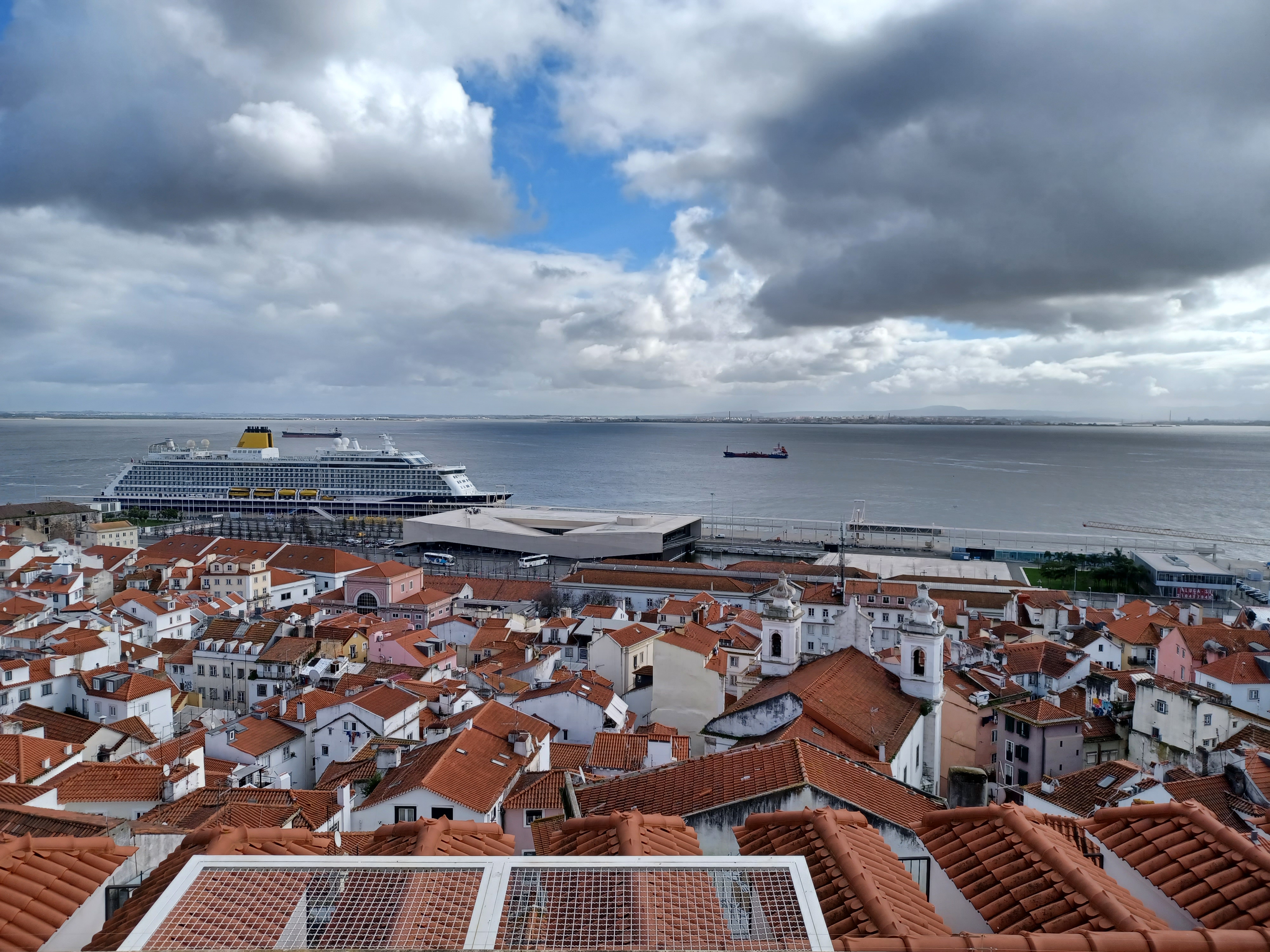
The first day should teach you how Lisbon is built. Begin high in the eastern historic city, then descend through Graça and Alfama toward Baixa and Chiado instead of repeatedly climbing back into the same streets.
09:00–11:00 · Graça or Castelo de São Jorge
Start with altitude. If the castle matters to you, make it the day's one major interior and go early. Its current schedule opens at 09:00, which makes the beginning of the day useful before the historic centre becomes busier. If the castle itself is not a priority, use the first hours for Graça and the viewpoints instead and keep the morning entirely outdoors.
This is a deliberate choice: castle or neighbourhood depth. Doing both slowly is possible; trying to add every nearby church, viewpoint and museum is where the day starts to collapse.
11:00–14:00 · Descend through Alfama
Move downhill through the historic fabric rather than treating Alfama as a destination you enter and leave through the same gate. Santa Luzia, Portas do Sol, the streets around Sé and the smaller lanes between them make more sense as a continuous descent.
Do not schedule lunch to the minute. Let the route decide where you stop. The purpose of this part of the day is to make room for Lisbon's street scale — not to turn the neighbourhood into a sequence of photo stops.
14:00–18:00 · Baixa into Chiado
Continue into Baixa, then climb gradually toward Chiado. This is where Lisbon becomes easier to read: formal squares, commercial streets, cafés and a more polished central rhythm replace Alfama's tighter street geometry.
If your legs need a reset, take it here. A three-day itinerary works better when the middle of day one contains an actual pause rather than another compulsory attraction.
Evening · Chiado or Príncipe Real
Finish the day close to where you want dinner rather than forcing one more cross-city move. Chiado keeps the evening easy. Príncipe Real adds more neighbourhood life, restaurants and a slightly more residential-feeling end to the day.
If you use Tram 28E at any point, treat it as transport, not as a mandatory sightseeing ride. CARRIS currently routes it through Graça, Santa Luzia, Sé, Chiado and Estrela toward Campo de Ourique, but operational changes can occur. Check the live operator information rather than building the day around a perfect end-to-end tram journey.
DAY 2 · Give Belém its own chapter
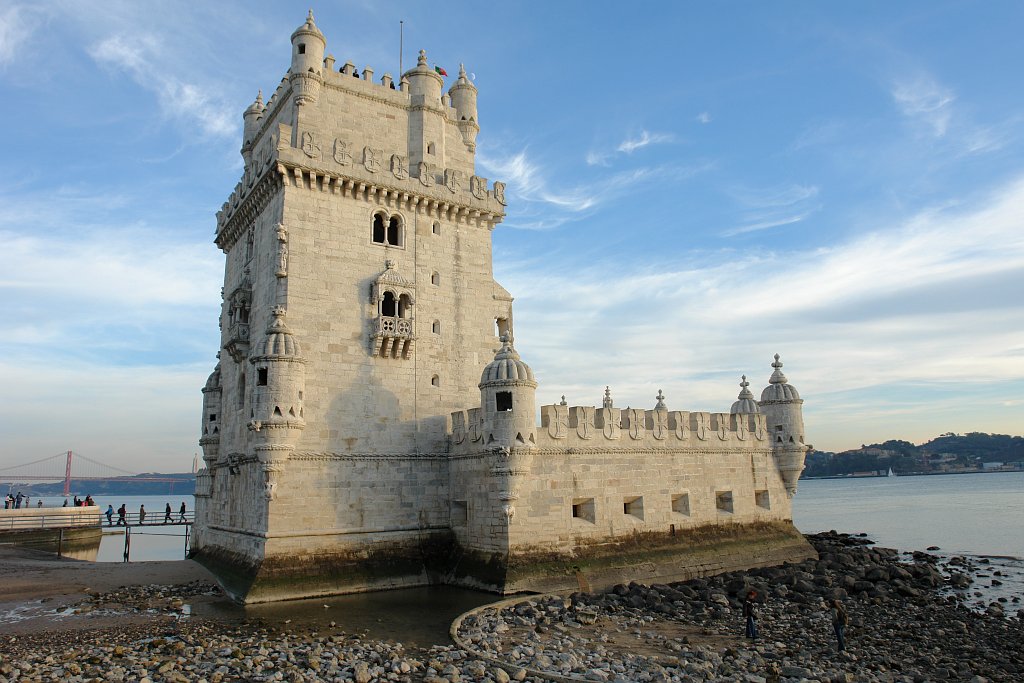
Belém should not be squeezed between Alfama in the morning and Príncipe Real at lunch. It sits west of the central city and has enough architecture, museums, gardens and riverfront to justify one coherent block of time.
Morning · Go west once
Move directly to Belém and stay there. Choose your cultural anchor according to your interests: the Jerónimos complex and maritime history, a museum, architecture, or simply the monumental riverfront. The point is not to complete every major institution in the district.
One good interior plus the outdoor fabric usually produces a stronger morning than three rushed ticket queues.
Lunch · Stay in the district
Do not travel back to the centre just to eat somewhere on a list. Lunch is part of the geographic logic. Staying west preserves the day and lets the rhythm change naturally from monuments to riverfront.
Afternoon · River, architecture or MAAT
Choose one direction for the afternoon. If contemporary art, architecture and technology fit your taste, MAAT is a natural western continuation. Its current published schedule is Wednesday to Monday, 10:00–19:00, and it is closed on Tuesdays, so this is one of the few places where the day of the week should actively change your plan.
If MAAT is closed or not your interest, do not replace it with three other museums. Use the riverfront, gardens and the architecture of Belém as the slower second half of the day.
Evening · Return once, then stop moving
Return to central Lisbon for the evening and choose one zone: Cais do Sodré if you want energy and easy transport, Chiado for a smoother transition, or Príncipe Real for dinner and a more neighbourhood-led night.
The day works because the long movement happens twice: once west in the morning, once back in the evening. Everything in between belongs to the same part of the city.
DAY 3 · Live in Lisbon instead of finishing Lisbon
The third day is where many itineraries panic. They try to capture everything not yet seen. OREVYON would do the opposite: use the final day to experience the city at a more local scale.
Morning · Estrela and the slower west-central city
Begin around Estrela. A garden, coffee and residential streets create a different Lisbon from the first two days. From here, move through São Bento rather than teleporting to the next headline sight.
This is also a useful test of whether you enjoy Lisbon as a place rather than only as an attraction set. If the answer is yes, do not rush this part.
Midday · Príncipe Real without a deadline
Use Príncipe Real for the kind of time most itineraries forget to allocate: shops you did not plan, a longer lunch, a garden, a second coffee or simply a street that makes you turn left.
Because you already covered the major eastern and western geographic clusters, this time is no longer 'wasted'. It is the reward for having planned those first two days coherently.
Late afternoon · Choose what the trip is still missing
Keep this block open until the trip is underway. You may want to return to Alfama, spend more time by the river, visit one museum you consciously skipped, sit in a square, or do nothing for an hour before dinner.
A strong three-day journey should leave one piece of Lisbon unfinished on purpose. That unfinished piece is often a better reason to return than the satisfaction of having checked every box.
Evening · End in the neighbourhood you would come back to
For the final night, return to the area that felt most like your Lisbon. That might be Alfama for atmosphere, Príncipe Real for restaurants, Cais do Sodré for energy, or a quieter table around Estrela.
The point is repetition. Coming back to a place you liked is not inefficient. It is one of the first signs that a city has stopped being a route and started becoming a memory.
Should you add Sintra to a three-day Lisbon trip?
Not by default. Sintra is not a small extension to a Lisbon afternoon. Major visits such as Pena Palace have timed-entry logistics, and the town and surrounding monuments deserve a deliberate day.
If Sintra is one of the main reasons you are travelling, replace Day 3 with Sintra. Do not try to do the full Lisbon route above and attach Sintra to its edge. If you have four or five nights, Sintra becomes much easier to add without taking Lisbon's breathing room away.
If your flight times reduce the trip
- Late arrival before Day 1: keep the plan as written.
- Arrival during Day 1: begin in Baixa / Chiado and move the eastern historic cluster to the next full morning.
- Early departure after Day 3: protect Day 2 as the Belém day and shorten Day 3 rather than splitting every day into fragments.
- Only two full days: use Day 1 and Day 2, then choose whether neighbourhood depth or a major omitted priority matters more than completing the template.
The OREVYON read
A good 72 hours in Lisbon is not the route that proves how much you managed to see.
It is the route that lets old Lisbon, the western riverfront and neighbourhood life each have their own time — without making you cross the city every few hours.
Three days should leave you with a clear sense of Lisbon and at least one reason to come back.