
Milos is not impossible without a car, but a car-free trip is meaningfully thinner. Some villages are easy to walk and boats unlock part of the coast, yet the island's beaches, viewpoints and inland connections are dispersed. For most first visits, a car or scooter adds significant flexibility.
Walking works inside villages, not across the island

Adamas, Pollonia, Plaka and Trypiti each support useful stretches on foot, but the island should not be treated as one continuous walkable destination. The key question is how much of the coast and how many different bases you want to reach.
Boats solve only one part of the geography

A boat excursion is central for Kleftiko and coastal exploration, but it does not replace land mobility. Sea access reveals the island differently; it should complement rather than substitute for the ability to move between beaches and villages.
Independent transport protects flexibility
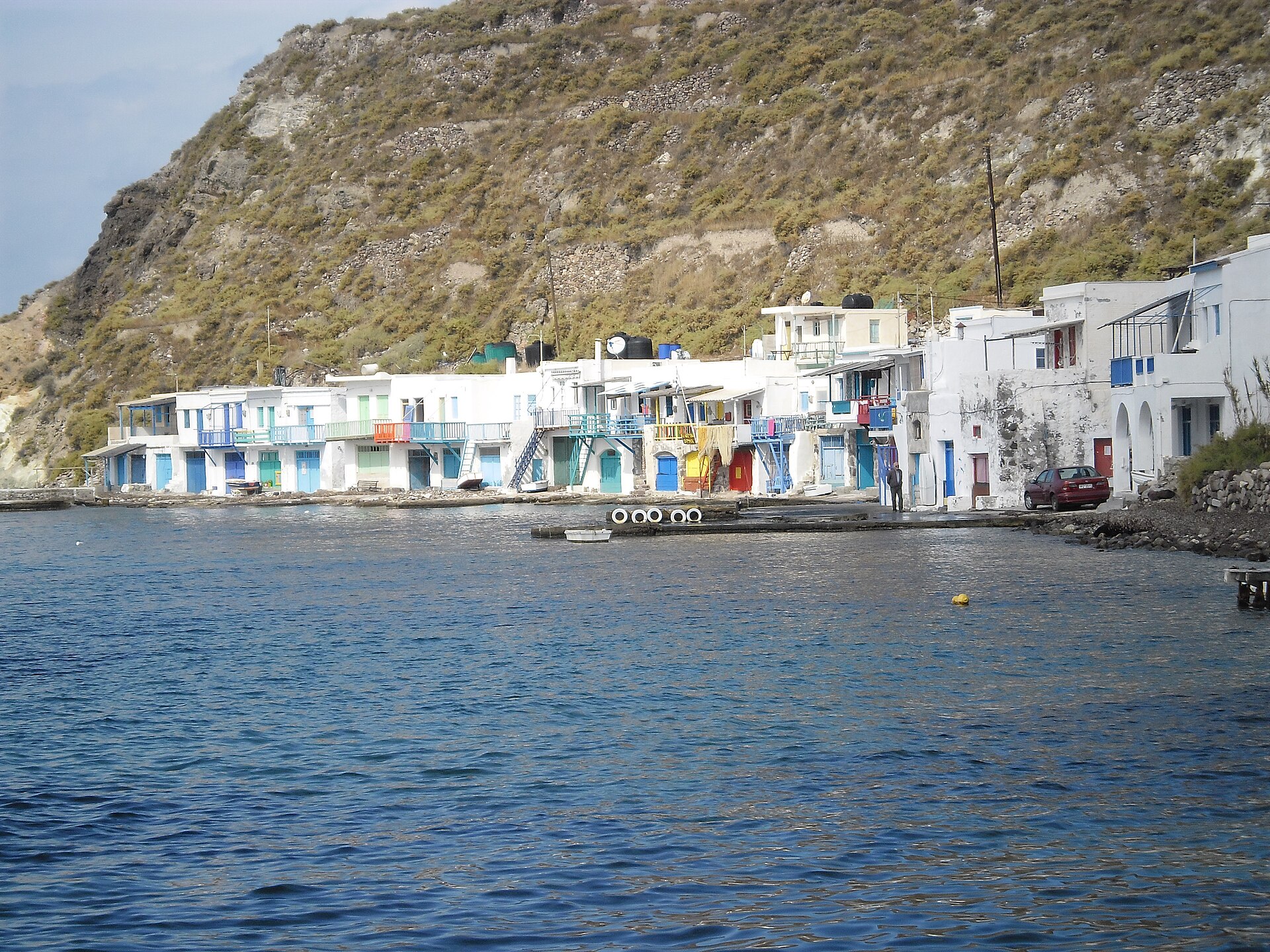
A car or scooter lets you react to wind, heat, beach conditions and spontaneous changes without rebuilding the entire day. That flexibility matters on an island where the best plan can shift with conditions.
A narrow car-free stay can still work
If you choose a practical base, accept fewer dispersed beach days and use organised transfers or boats selectively, a car-free trip can be coherent. The mistake is expecting the same island coverage as a self-drive itinerary without adding friction elsewhere.
The OREVYON choice depends on trip ambition
If your goal is deep exploration across multiple coasts and villages, independent transport is the stronger fit. If you want a slower stay built around one base, a boat day and a smaller radius, a car-free version becomes more realistic.