The optical illusion
From the right viewpoint, Sørvágsvatn appears dramatically elevated above the ocean. It is a perspective effect, not a lake suspended hundreds of metres in the air.
 OREVYON
An impossible-looking lake, a 142-metre cliff and an unforgettable local legend.
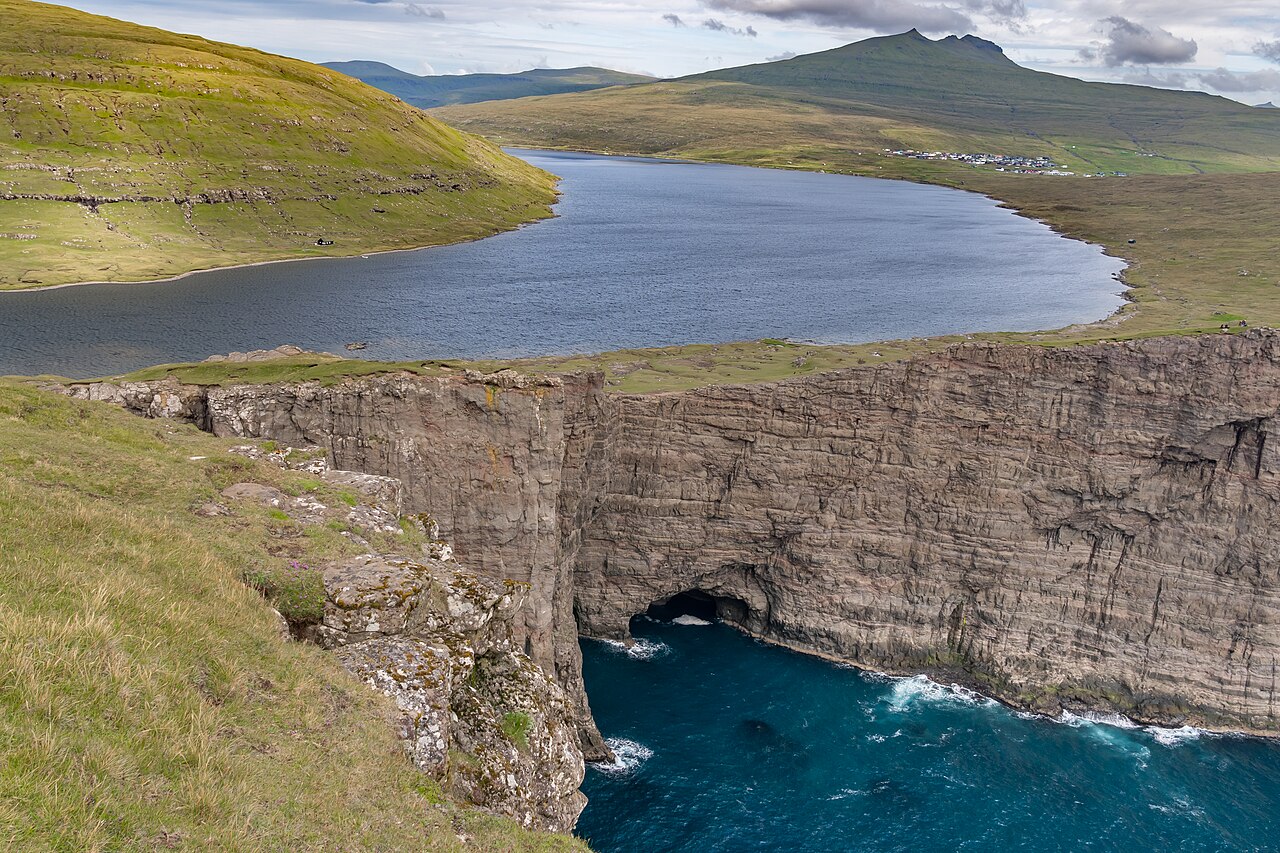
On Vágar in the Faroe Islands, Trælanípa rises 142 metres above the Atlantic. From the cliff, Lake Sørvágsvatn (also known as Leitisvatn) appears to float over the sea: a striking optical illusion created by perspective. Nearby, Bøsdalafossur spills from the lake toward the Atlantic. The name Trælanípa means 'Slave Cliff'. A local Viking-age legend says enslaved people were pushed over its edge; this is folklore, not a verified historical account. Visitors follow a designated, paid hiking trail from Miðvágur and should stay well back from the exposed cliff edge.
From the right viewpoint, Sørvágsvatn appears dramatically elevated above the ocean. It is a perspective effect, not a lake suspended hundreds of metres in the air.
Trælanípa forms a 142-metre rock face above the Atlantic. Bøsdalafossur is the waterfall at the western end of Sørvágsvatn, where fresh water flows towards the ocean.
The Faroese name translates as 'Slave Cliff'. Local Viking-age stories describe enslaved people being pushed from the precipice. Present this as a legend, not a confirmed historical event.
The official self-guided route is about 3.5 km each way (7 km total), roughly 45 minutes each way; allow 2.5–3 hours including stops. Start at the signed landowners' entrance near Miðvágur. The lake-edge path is currently closed to protect birds. Check current conditions and fees before arrival.
Follow the marked route from Miðvágur. The lakeshore path is closed for bird protection. Keep a safe distance from the cliff edge and watch the weather.
Access information and fees checked 25 October 2026. Recheck before departure.
Official trail access and fees ↗The Slave Cliff story is local folklore, not independently established historical fact.